Bluetooth trackers in India can make everyday items easier to find. Attach one to your keys, place it in a bag, or keep a compatible tracker with luggage before a trip. If an item goes missing nearby, your phone may help you locate it. If it is farther away, the result depends on the tracker’s network, nearby compatible devices and the manufacturer’s app. That is why choosing a tracker is not simply about buying the cheapest tag.
This guide explains how Bluetooth trackers work, what Indian buyers should check before paying, and how to use them responsibly. The best choice depends on the phone you own, the things you want to track and whether you need a nearby locator or a wider crowd-assisted finding network.
What is a Bluetooth tracker?
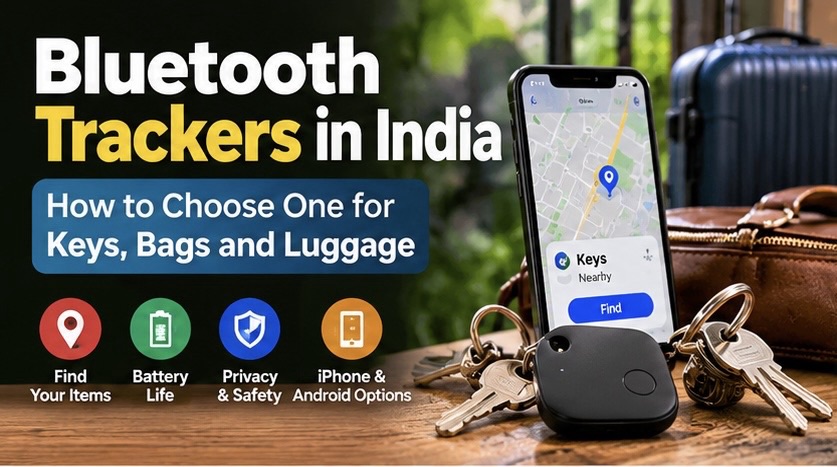
A Bluetooth tracker is a small accessory that communicates with a nearby phone or compatible device. When the tracker is within Bluetooth range, its app may show that it is nearby or make the tag play a sound. Some products also support a wider finding network: participating phones can detect the tag and securely report an approximate location to its owner. The precise method and available features vary by brand and ecosystem.
Most Bluetooth trackers are designed for items, not continuous live vehicle or people tracking. They usually do not contain a cellular connection or GPS receiver that independently reports a live position everywhere. A tracker may show a last-known location rather than a real-time location, especially when no compatible devices are nearby.
Bluetooth tracker vs GPS tracker
| Feature | Bluetooth tracker | GPS/cellular tracker |
|---|---|---|
| Typical use | Keys, bags, wallets and luggage | Vehicles, equipment or live location use cases |
| Location method | Nearby Bluetooth devices and sometimes a finding network | GPS positioning plus a way to transmit location |
| Subscription | Often no monthly plan for basic functions; verify features | May need a SIM or service plan |
| Best strength | Small size, simple setup and low maintenance | More suitable for regular remote tracking when properly configured |
| Limitation | Not guaranteed to update in isolated places | More power use, cost and setup complexity |
If you want to find a key inside your home, a Bluetooth tag may be enough. If you need to monitor a moving vehicle across long distances, do not assume a basic Bluetooth tag can do that job.
Check phone compatibility before buying
Compatibility is one of the most important buying decisions. Some trackers are designed for Apple’s Find My network, while others use Google’s Find My Device network or a brand-specific app. These systems are not automatically interchangeable. A tracker that works well with one phone ecosystem may not offer the same finding features on another.
- Check the exact supported operating systems and minimum software versions.
- Confirm whether the tracker joins a broad finding network or works only with its own app.
- Review whether left-behind alerts, sound playback and sharing with family are supported on your phone.
- Check if setup requires an account, location permissions or a particular app.
- If your household uses both Android and iPhone, choose a model whose core functions work for the person who will manage it.
Do not rely only on a marketplace listing that says “Android compatible” or “iPhone compatible.” Open the manufacturer’s current compatibility page and confirm the features available for your specific device.
How far away can a tracker be found?
There is no single range that applies to every Bluetooth tracker. Nearby finding depends on Bluetooth conditions, walls, interference, the phone and the tracker’s design. A clear room may behave differently from a crowded railway station, a multi-storey building or a suitcase surrounded by other luggage.
When the tracker is outside direct Bluetooth range, a crowd-assisted network may help if participating devices pass close enough to detect it. That is different from guaranteed continuous tracking. In a remote area with few compatible devices, the map may not update for a long time. Before travel, understand what the product means by “global finding” and whether the feature is supported in your region.
Battery life, replacement and water resistance
Many tags use replaceable coin-cell batteries, while others have rechargeable or sealed batteries. Replaceable batteries can extend the useful life of the tracker, but you need the correct battery type and safe handling. Keep small batteries away from children and pets, and dispose of used cells responsibly.
Check the manufacturer’s battery-life estimate and understand that actual life depends on sound alerts, temperature, connection frequency and other use patterns. Also check the water- and dust-resistance rating. Resistance is not the same as being waterproof forever; seals can wear, and ratings are tested under specific conditions. A tag on luggage may face rain and splashes, while one attached to a pet collar may experience much more movement and exposure.
Privacy and unwanted-tracking alerts matter
Responsible tracker ecosystems include features intended to help people detect an unknown tracker that may be moving with them. Check how your chosen phone detects unfamiliar tags, what alerts look like and what steps the manufacturer recommends. Keep the tracker’s firmware and your phone software updated.
Use trackers for your own belongings or with clear permission. Do not hide a tag in another person’s bag, vehicle or personal property to monitor them without their knowledge. A tracker is not a substitute for consent, and using one to stalk someone can put that person at risk and may violate laws or platform rules.
When sharing an item’s location with family, review who has access and remove sharing permissions when they are no longer needed. If you sell or give away a tracker, follow the manufacturer’s steps to remove it from your account and reset it before the next person sets it up.
What to check before buying Bluetooth trackers in India
- Supported network: confirm the ecosystem and phone compatibility.
- Battery type: check whether it is replaceable, rechargeable or sealed.
- Sound and nearby finding: make sure the tag has a speaker if audible locating matters to you.
- Sharing: check whether trusted family members can help find an item.
- Water resistance: match the rating to how you will use it.
- Size and attachment: decide whether you need a key ring, wallet card, adhesive mount or luggage holder.
- Privacy protections: look for unwanted-tracker detection and clear reset instructions.
- Warranty and returns: buy from a seller with a clear return policy and local support.
Which tracker suits which item?
- Keys: a small tag with a loud enough speaker and a key-ring attachment is usually convenient.
- Backpack: look for a secure holder and a tag that will not be easily knocked loose.
- Luggage: choose a durable design and remember that a tracker does not replace airline baggage procedures or travel insurance.
- Wallet: a thin card-shaped tracker may fit better than a round tag, but confirm battery replacement options.
- Camera bag or work equipment: consider who needs access to the location and whether a Bluetooth tracker provides enough coverage for the risk.
Common mistakes to avoid
Do not buy before checking ecosystem compatibility. Do not assume the map will always show a live position. Do not confuse Bluetooth tags with GPS trackers. Avoid attaching a tag in a way that blocks its speaker or makes the battery impossible to replace. Finally, do not treat a tracker as a security guarantee: someone may remove it, its battery can run down, and radio conditions can prevent updates.
Frequently asked questions
Do Bluetooth trackers work without internet?
Nearby Bluetooth functions may work without an internet connection, but maps, account services and crowd-assisted location updates can require connectivity. The exact behaviour depends on the product and phone.
Can I track luggage on a flight?
A compatible tracker can help you see a reported location when the network detects it, but it is not a guaranteed live airline tracking service. Check current airline rules and keep following the airline’s baggage process.
Do Bluetooth trackers need a monthly subscription?
Many basic tags do not require a monthly subscription, but features, third-party services and cellular GPS products vary. Verify the current terms before buying.
Can one tracker work with every phone?
No. Network support, setup and advanced features vary. Check compatibility for your exact phone and operating system.
A quick setup and maintenance checklist
Once you have chosen a compatible tracker, set it up while you are at home rather than waiting until an item goes missing. Update your phone, install the official app, pair the tag and test the sound and location features. Attach it firmly to the item, then check that the holder does not cover a speaker or make the battery compartment difficult to reach. If the tracker supports sharing, add only people who genuinely need access.
Make a simple habit of checking the battery alert in the app and replacing the battery before a trip. If you use a tracker in luggage, test the tag from another room and learn how its map behaves when it is out of Bluetooth range. These small steps reduce the chance of discovering a setup problem when you are already travelling.
Before handing an item to someone else or selling a tag, remove the tracker from your account and follow the manufacturer’s reset procedure. If you receive an unknown-tracker alert, use the phone’s instructions to identify the tag safely; do not assume every alert is malicious, but do take an unexplained alert seriously. This routine keeps the device useful while respecting other people’s privacy.
Final verdict
A Bluetooth tracker can be a useful, low-maintenance way to find keys, bags and luggage, but only when its ecosystem matches your phone and your expectations match its capabilities. Compare the finding network, battery, privacy protections and warranty—not just the price. For frequent remote tracking, evaluate a GPS/cellular product instead. Most importantly, use trackers transparently and only for belongings you own or have permission to track.