Home EV charging in India can make everyday electric-vehicle ownership more convenient, but the right setup depends on the property and vehicle. Parking rights, wiring condition, sanctioned electrical load, apartment approvals, charger compatibility and installation costs all affect whether a home charger is suitable. This guide covers charger types and the checks to make before choosing equipment. Requirements vary by state, DISCOM, building and vehicle, so confirm details with a qualified electrician, housing society and vehicle manufacturer.
Before comparing chargers, confirm three things: your car’s maximum AC charging rate, the electrical capacity available at the parking location and permission to install equipment. Then request a written quotation that separates the charger, cabling, protection devices, labour and any electrical-load upgrade. For broader vehicle running-cost decisions, see our guide to CNG car mileage and running costs in India. Local rules and tariffs vary, so verify them with your DISCOM and housing society.
Home EV Charging in India: AC Chargers and DC Fast Charging
Charging equipment divides into alternating current (AC) chargers and direct current (DC) fast chargers. AC units are slow or normal chargers typically deployed in domestic, office, or residential complex environments, delivering power output ranging from 3.3 kW to 22 kW. In contrast, DC fast chargers supply massive power spikes from 30 kW to over 240 kW, refilling battery packs rapidly but carrying higher equipment costs and public service premiums.
Connector compatibility depends on the vehicle, charger and charging use case. For most home installations, check the exact AC connector and maximum onboard AC charging rate in the vehicle manual before purchasing a wall box. Public DC fast-charging connectors and legacy charging standards are not automatically suitable for home use:
- Type-2 AC Chargers: The dominant standard for electric four-wheelers, delivering flexible power output for overnight residential replenishment.
- Legacy Bharat AC-001: This is an older public-charging specification; do not assume it is the correct choice for a new private home installation. Confirm compatibility with the vehicle maker and charger installer.
- CCS2 Connectors: The prevailing fast-charging standard for electric cars found across public highway corridors and dedicated urban charging hubs.
While public corridors rely heavily on CCS2 high-power hardware to enable long-distance travel, home environments depend almost exclusively on AC slow chargers or dedicated wall boxes provided directly by manufacturers at the time of purchase.
The Tier-2 and Tier-3 Adoption Shift
A notable trend in electric vehicle adoption across India is its rapid acceleration outside metropolitan cores. While policy discussions often target high-density urban centres like Delhi, actual volume growth increasingly stems from smaller towns and regional hubs such as Bareilly, Agra, Lucknow, and Simigudi.
This geographic dispersion shifts the primary technical challenge. Urban high-rises struggle with Resident Welfare Association (RWA) resistance, unclear cost-sharing models for common infrastructure, and load verification uncertainty. Meanwhile, smaller towns face entirely different physical hurdles tied directly to local utility quality.
Grid Quality, Voltage Fluctuations, and Safety Realities
Installing residential hardware outside major metropolitan power grids exposes underlying vulnerabilities in local electrical supply. Field deployments in Tier-2 and Tier-3 locations reveal that voltage surges can fluctuate up to 20 kV, posing significant safety hazards to both vehicle battery management systems and household wiring.
Hardware suppliers have had to engineer specialized surge protection features to withstand these regional grid realities. Furthermore, a shortage of trained local technicians capable of executing proper earthing and surge suppression installations compounds the risk profile. Without qualified installation personnel, unsafe informal connections can compromise residential safety and hardware longevity.
Power Distribution Companies and Tariff Structures
State power distribution companies, known as DISCOMs, operate under regulatory constraints that prevent them from directly investing in charging hardware beyond the utility meter. Direct utility investment risks creating uncompetitive market conditions, prompting DISCOMs to pursue collaboration models where private operators supply the charging gear while utilities furnish land and basic electrical feeds.
Regulatory frameworks surrounding electricity pricing also create confusion for residential consumers. Industry stakeholders advocate phasing out distinct, restrictive EV-specific residential tariffs in favour of time-of-use pricing models. Time-of-use structures automatically incentivize off-peak charging overnight, reducing regulatory friction and smoothing out aggregate grid demand.
Phased Load Planning for Residential Societies
Multi-story residential complexes and housing societies frequently hesitate to upgrade electrical loads due to upfront capital expenditures. Experts emphasize that overbuilding electrical infrastructure is unnecessary.
Utilities and energy consultants recommend phased load augmentation. If a housing society registers only a handful of electric vehicles initially, management should scale electrical capacity gradually rather than provisioning for an entire building capacity upfront. Because electric vehicles account for a tiny fraction of total electricity consumption—even with thousands of electric buses active in major transit fleets—cumulative power demand remains entirely manageable when properly phased.
Practical Implications and Trade-Offs for Home Installers
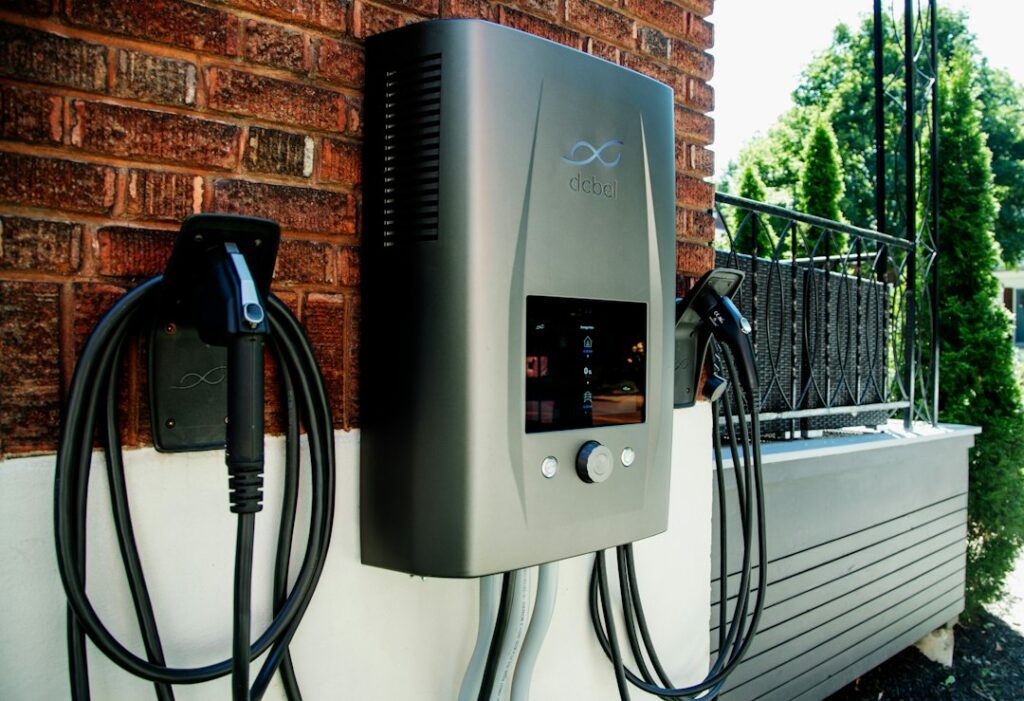
When transitioning to residential EV charging, consumers must weigh several practical trade-offs. Installing a dedicated 7.4 kW Type-2 AC wall box offers faster overnight replenishment compared to a standard 3.3 kW portable plug, but it requires a dedicated single-phase or three-phase high-amp connection. Homeowners must evaluate whether their sanctioned electrical load can support simultaneous heavy appliance usage, such as air conditioners and water heaters, while the vehicle charges.
Furthermore, apartment dwellers face distinct trade-offs between convenience and administrative friction. While securing RWA approval and running cabling from a common meter to a designated parking slot involves bureaucratic delays and potential disagreements over electricity billing, the long-term savings and convenience of waking up to a fully charged vehicle outweigh the initial setup hurdles.
Unresolved Challenges and Unconfirmed Metrics in Indian Home Charging
Despite growing deployment data from manufacturers and industry groups, several operational dimensions remain unconfirmed across the broader Indian market. While specific vendors report bundling tens of thousands of home chargers monthly, comprehensive nationwide metrics regarding exact residential charger uptime, long-term degradation rates under severe 20 kV voltage surges, and standardized RWA compliance costs are not universally tracked.
Additionally, while proposals like the Unified Energy Interface (UEI) aim to resolve interoperability and discovery issues for public infrastructure, the integration timeline for seamlessly connecting private residential chargers to broader virtual power plants or decentralized energy trading networks remains largely speculative. Policy frameworks continue to evolve, leaving individual homeowners to navigate disparate utility regulations and hardware protocols without a unified national standard for residential smart-grid integration.
Frequently Asked Questions About Home EV Charging in India
Can I charge my electric car using a standard 15A household socket?
Yes, most electric cars come with a portable emergency charger that plugs into a standard 15-amp home socket. However, this method delivers slow speeds (typically 3.3 kW) and is best reserved for occasional use or emergency top-ups rather than daily primary charging.
What is the ideal electrical load upgrade for a residential parking slot?
For a standard 7.4 kW AC wall box charger, upgrading your sanctioned home load by an additional 5 kW to 7 kW is generally recommended to prevent tripping main circuit breakers when running other household appliances concurrently.
How do voltage fluctuations impact home EV chargers?
Severe voltage surges or sags can damage the sensitive internal components of an EV onboard charger or wall box. Quality wall boxes feature built-in surge protection, but professional earth-leakage circuit breakers (ELCB) and miniature circuit breakers (MCB) are essential safety additions.
Are specialized EV electricity tariffs available across all Indian states?
Tariff structures vary significantly by state and DISCOM. While progressive states have introduced subsidized EV tariffs or time-of-day billing to encourage off-peak charging, others still apply standard domestic slab rates, making it crucial to check local utility policies.
The Practical Takeaway for Buyers
For prospective electric vehicle buyers in India, evaluating home setup feasibility is just as important as comparing vehicle range or cabin features. Bundled home chargers supplied with vehicle purchases offer a reliable baseline, but buyers must verify local transformer capacity, secure RWA clearance for dedicated wall box installation, and ensure professional, grounded wiring is executed by certified technicians.
As the market evolves past public infrastructure fixations, the true measure of electric mobility convenience will rely on secure, digitized, and safely integrated residential power access.
Sources & further reading
- India’s EV Growth Is Slowing Due To Lack Of Home Charging: Report — NDTV
- India’s EV charging push faces ground-level hurdles, home charging must be seen as key solution — downtoearth.org.in
- Electric Vehicle charging explained: Home charging vs public charging – The Times of India — Indiatimes
- Underutilisation, not supply: The real problem with India’s EV charging infrastructure — Your Story