The Shift in Apple’s Entry-Level Desktop Strategy
For several generations, Apple’s smallest desktop held a reputation as one of the most accessible entry points into macOS, frequently recommended as an affordable server, home computer, or student workstation. That value proposition shifted significantly with the arrival of the Mac mini M6. While the physical chassis remains remarkably tiny—measuring about five inches square and weighing roughly 1.5 pounds—the starting price has climbed to $899 globally, and Rs 88,990 in India. This departure from previous ultra-budget pricing means buyers are no longer getting a bargain novelty, but rather a robust, midrange machine that competes directly with much larger desktop systems.
Alongside the base M6 option, Apple also rolled out the more powerful M5 Pro configurations, catering to heavy video editors and professionals requiring extensive multi-core workflows. Yet for the vast majority of mainstream users, content creators, and office professionals, the standard Mac mini M6 packs more than enough capability to handle everyday tasks without breaking a sweat.
Processing Performance and Daily Productivity
At the core of the base configuration is a 12-core CPU paired with a 12-core GPU and a dual 16-core Neural Engine. Independent benchmark testing reveals notable gains over older iterations. For instance, review units equipped with 24GB of RAM and upgraded solid-state drives outpaced previous-generation prosumer models in single-threaded CPU benchmarks while remaining cool and quiet under heavy load.
Productivity benchmarks supplied by the manufacturer indicate that spreadsheet execution in applications like Microsoft Excel is substantially faster compared to older M1 architectures. Whether juggling dozens of browser tabs, compiling code, or managing complex office workflows, the M6 processor handles routine operations with fluid responsiveness. For users looking to optimize spreadsheet tasks, modern AI workflows in Excel and Google Sheets benefit immensely from this underlying CPU headroom.
Local AI Processing and Neural Capabilities
A primary emphasis of the new generation centers on on-device machine learning and generative artificial intelligence. Apple highlights massive speed improvements for large language model prompt processing within tools like LM Studio, attributing these gains to dedicated Neural Accelerator coprocessors built directly into the GPU cores.
This hardware architecture makes the compact desktop an efficient local workstation for running AI agents, summarizing large document repositories, and experimenting with open-weight models without relying entirely on cloud servers. For freelancers and knowledge workers exploring automation, having dedicated on-device AI compute power ensures both faster response loops and better data privacy, complementing tools like fast, affordable AI models and specialized productivity agents.
Design Continuity and Connectivity Trade-Offs
Apple retained the ultra-compact, over-sized Apple TV aesthetic from the previous redesign. The machine sits neatly on any crowded desk without claiming excessive footprint. However, this minimalist form factor carries a couple of recurring ergonomic friction points that buyers should keep in mind.
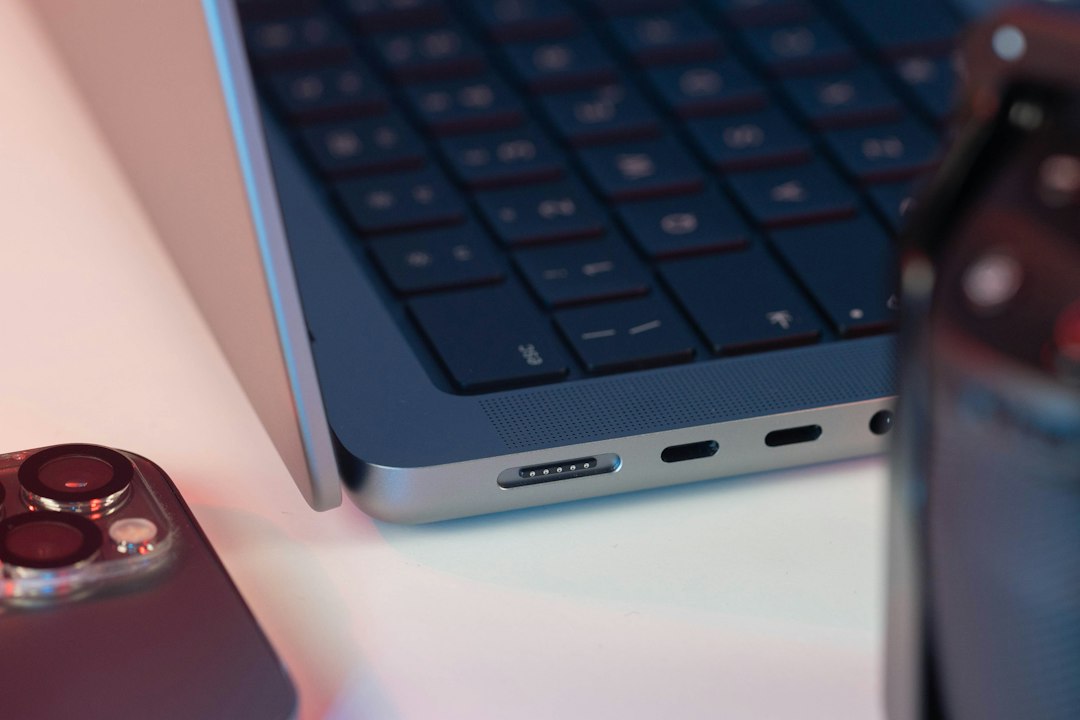
The power button remains positioned on the bottom panel near the rear ports, making it slightly awkward to reach for a hard reset if the device is tucked away in a corner. On the connectivity front, the layout offers front-facing USB-C ports, an HDMI connection, a 2.5 Gbps Ethernet jack, and rear Thunderbolt ports. The standard M6 model features Thunderbolt 4 supporting up to 40 Gbps, whereas the M5 Pro variants step up to Thunderbolt 5 for faster external storage transfers. Notably, an integrated SD card slot remains absent across the board, requiring external dongles for photographers and video editors.
Pricing Realities and Configuration Pitfalls
The most debated aspect of the new lineup is the financial investment required. Starting at $899 globally and Rs 88,990 in India, the baseline model includes 16GB of unified memory and a modest 256GB solid-state drive. Independent reviewers widely caution that the 256GB starting drive fills up rapidly, making a storage upgrade essential before purchase.
Apple’s traditional pricing structure for upgrades remains steep. Bumping storage up to 512GB typically adds a significant premium, while higher-tier upgrades scale upward rapidly. Buyers configured with 24GB of RAM and a 512GB or 1TB SSD push the total investment past the initial threshold. Pre-orders and availability opened through official Apple channels, but prospective owners must weigh whether the compact form factor justifies the extra cost compared to traditional tower PCs or competing small form factor systems.
Practical Implications and Real-World Trade-Offs
Adopting a compact desktop system like the Mac mini M6 requires accepting specific compromises. While the thermal design efficiently dissipates heat during short bursts of high-intensity computing, sustained multi-hour rendering sessions can cause the internal fan to spin up audibly, though it remains far quieter than traditional gaming towers or enterprise workstations. Furthermore, because internal components are entirely soldered, hardware failure in either memory or storage necessitates replacing the logic board entirely, making AppleCare+ protection a recommended consideration for long-term deployments.
Another practical consideration involves multi-monitor setups. The standard M6 configuration supports up to three external displays depending on resolution and refresh rate configurations, allowing creative professionals to build expansive command centers. However, users transitioning from legacy PC setups will need to invest in appropriate cable adapters, as the machine relies exclusively on modern HDMI and USB-C/Thunderbolt outputs.
Use Cases and Limitations in Professional Workflows
Understanding how the Mac mini M6 fits into distinct professional environments helps clarify its operational limits. For graphic designers, web developers, and local AI experimenters, the combination of 12-core CPU processing and up to 32GB of unified memory provides a nimble, responsive environment. Code compilation and containerized development tasks run swiftly due to memory bandwidth reaching 170 GB/s on the base M6 architecture.
However, limitations emerge when scaling toward heavy enterprise-grade workloads. Video editors working with multi-stream 8K timelines or handling massive uncompressed raw footage will quickly hit bottlenecks on the standard M6 chip, making the more expensive M5 Pro variant—with its higher memory bandwidth of 307 GB/s and support for Thunderbolt 5—a necessary upgrade. Additionally, gamers will find macOS library limitations apply, as high-end AAA gaming remains constrained despite the 30-percent graphics performance improvement over previous generation silicon.
What Remains Unconfirmed and Open Questions
As independent reviews continue to dissect Apple’s latest hardware release, several details remain subject to long-term real-world verification. While manufacturer claims of 13.5x faster LLM prompt processing compared to the M1 chip showcase impressive strides in local AI capability, day-to-day third-party application optimization across diverse open-source machine learning frameworks is still maturing. Furthermore, long-term thermal behavior under continuous, unattended server loads—such as running 24/7 background AI agent nodes—requires extended field testing beyond standard review cycles. Prospective buyers should monitor ongoing community feedback regarding sustained performance throttling during heavy multi-hour processing tasks.
Buyer Decision Criteria
Choosing the right configuration depends heavily on daily computing demands and budget tolerance. The following criteria help clarify whether the Mac mini M6 fits your specific workflow:
- Workload Intensity: Choose the base Mac mini M6 if your daily routine involves web browsing, document editing, basic video cutting, and local AI agent testing. Opt for the M5 Pro variant only if you routinely render massive video timelines or compile massive codebases.
- Storage Requirements: Avoid the 256GB base tier unless you rely exclusively on cloud storage. Upgrading to at least 512GB is strongly recommended to prevent immediate drive capacity bottlenecks.
- Peripherals: Remember that the box contains only the computer and power cord. Buyers must budget separately for a reliable monitor, keyboard, and mouse.
- Upgradeability: Internal components are soldered and non-upgradeable post-purchase, meaning you must spec out your unified memory and storage needs upfront.
Frequently Asked Questions
Can I upgrade the RAM or storage on the Mac mini M6 after purchase?
No. Both the unified memory and solid-state drive are soldered directly to the logic board. You must configure your desired specifications at the time of purchase.
Does the standard Mac mini M6 support multiple monitors?
Yes, the base model supports multiple external displays over its Thunderbolt and HDMI ports, though specific resolution and refresh rate limitations apply depending on the number of active monitors.
Is the base 256GB storage model sufficient for general use?
For most users, 256GB fills up quickly due to operating system updates, application caches, and local media files. Upgrading to 512GB or higher is strongly advised for long-term usability.
A Balanced Assessment of Modern Desktop Value
The Mac mini M6 successfully bridges the gap between ultra-compact minimalism and serious desktop performance. It loses the impulse-buy affordability of older generations, but gains substantial processing muscle and dedicated AI acceleration that future-proofs it for modern software demands. For professionals and enthusiasts seeking a quiet, space-saving desktop that handles intensive multitasking and local machine learning without cluttering the workspace, it remains a top-tier small form factor choice, provided buyers carefully select their configuration tier upfront to account for non-upgradeable internal components.
Sources & further reading
- M6 Mac mini Review: A Better Tiny Desktop, With or Without AI — gizmodo
- Apple Mac mini M6, Mac Studio M5 Max and M5 Ultra launched: Check India price and availability — India TV
- Apple Mac mini (2026, M6) Review: Making Mincemeat of Midpriced Mini-Desktops — PC Magazine
- Apple Mac mini (M6) review: The best compact desktop is no longer a great deal – Engadget — Engadget