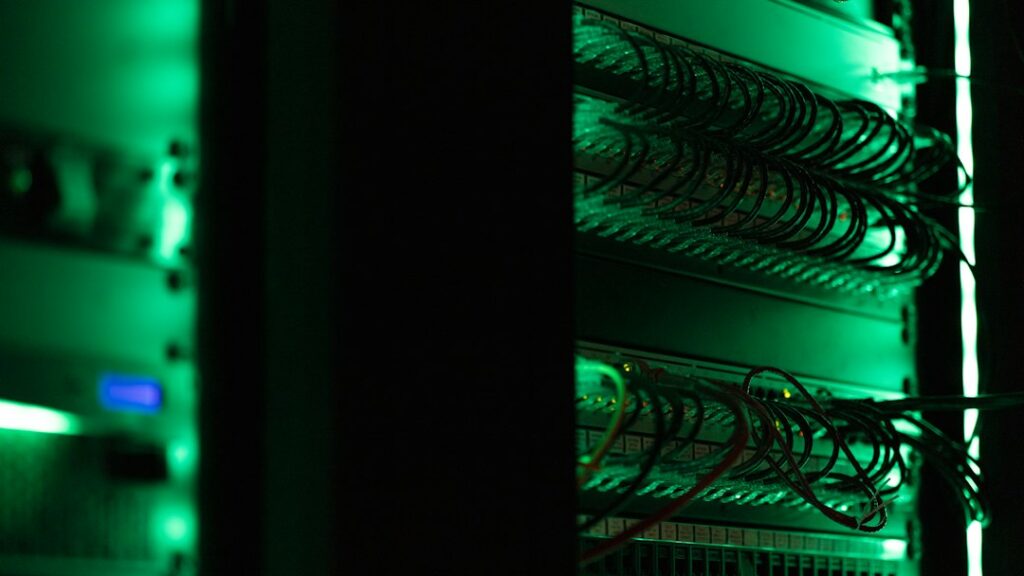
AI data centres in India are expanding as businesses adopt artificial intelligence, cloud computing and other data-intensive services. This growth brings investment and digital opportunities, but it also raises important questions about electricity demand, cooling water and local communities.
AI assistants, cloud storage, online banking, video streaming and business software all rely on physical computing infrastructure. As generative AI expands, companies are investing in servers, networking, storage and cooling systems to train and run models. India wants to become a major destination for digital infrastructure, but the expansion raises practical questions about electricity, water, land use and the communities hosting new facilities.
The issue is not simply whether data centres are good or bad. They can support cloud services, digital businesses, investment and specialised jobs. They can also add pressure to local utilities if expansion outpaces planning. The goal should be infrastructure that is reliable and efficient, with transparent resource use and meaningful consultation.
Read more explainers in our our on-device AI vs cloud AI explainer.
What is an AI data centre?
A data centre houses servers, storage devices, networking equipment and the systems needed to keep them operating. AI workloads often use specialised accelerators such as GPUs, which can draw substantial power and produce concentrated heat. Facilities need electrical connections, cooling, backup systems, security and high-capacity connectivity.
Training a large model and serving answers to millions of users are different workloads, but both require computing capacity. The electricity used by a single AI interaction varies with model size, prompt length, hardware, utilisation and cooling. It is misleading to quote one universal energy figure for every AI query.
Data centres also support banking, e-commerce, video, disaster recovery and enterprise applications. When evaluating their impact, distinguish the growth of digital services overall from the additional demand associated with AI-specific workloads.
Electricity is the central infrastructure challenge
Servers need power continuously. A facility also uses electricity for cooling, power conversion, lighting and security. As computing density rises, electrical demand can grow even if the building footprint stays similar. The local effect depends on facility size, grid connections, transmission capacity and when demand peaks.
A well-planned connection may affect a community differently from a project competing with existing users during a constrained period. Authorities should assess cumulative demand from multiple projects, not treat each site in isolation. Backup generators and uninterruptible power supplies protect operations but bring their own considerations, including fuel, testing, noise and local emissions.
Renewable-energy contracts can reduce the carbon intensity of a company’s electricity, but the details matter. An annual claim that consumption is matched with renewable generation does not necessarily mean the site is powered by clean electricity at every hour. Grid capacity, storage, timing and additional clean generation influence the real-world result.
Water and cooling depend on location
Servers produce heat, and data centres must remove it. Some cooling systems use water directly or indirectly; others rely more on air, refrigerants or closed-loop designs. Water demand varies with climate, facility design, workload and the cooling system’s operating conditions.
The question is not only how much water a facility uses but where it comes from, when it is used and whether local supplies are already stressed. A litre consumed in a water-abundant area can have a different local impact from the same amount in a drought-prone area. Seasonal demand matters because cooling needs can coincide with periods when households, farms and other industries also need water.
Claims such as water-free cooling need context. A facility with low direct water use may still rely on electricity generation that consumes water elsewhere. Transparent reporting should explain the measurement boundary, water source, seasonal patterns and actual consumption after the facility opens.
Land, noise and neighbourhood concerns
Large data centres may require buildings, substations, transmission lines, generators and cooling equipment. Construction can change traffic patterns and the character of a neighbourhood. During operation, fans and cooling systems can create continuous noise, while generator testing may cause additional disturbance.
These impacts differ by project and can be reduced through careful siting, setbacks, acoustic barriers, equipment choice, construction schedules and monitoring. Public consultation is most useful before major decisions are final, when residents can still influence design. People should be able to find clear information about expected power and water demand, traffic, noise, emergency plans and complaint channels.
It is important to distinguish a reported community concern from a verified impact. A news report that residents are worried establishes that a dispute exists; it does not prove every allegation. Project-specific environmental assessments, permits, utility data and independent monitoring are needed to evaluate a site.
Why India wants the investment
Data centres can support cloud computing, AI development, financial services, e-commerce, media and enterprise software. Locating infrastructure closer to users can reduce latency and support service resilience. Investment may create construction and technical jobs, while local capacity can help startups deploy products.
However, data centres are capital-intensive and may create fewer permanent jobs per unit of investment than other industries. Local value depends on hiring, skills development, supplier opportunities, tax arrangements and the public cost of infrastructure. Policymakers should look beyond headline investment amounts and ask whether projects bring measurable benefits to the region.
How efficiency can lower the footprint
- More efficient servers and accelerators can perform more work for the same energy input.
- Better scheduling and utilisation can reduce idle capacity.
- Efficient power distribution reduces losses.
- Cooling should match local climate and water conditions.
- Renewable electricity, storage and grid upgrades can reduce emissions and improve resilience.
- Transparent reporting lets communities compare promises with actual performance.
Efficiency alone is not enough. If computing demand grows faster than efficiency improves, total resource use can still rise. Good planning tracks both efficiency per unit of computing and the facility’s total electricity and water consumption.
What consumers and businesses can do
Consumers do not need to stop using digital services to care about infrastructure. The more important changes are efficient facilities, cleaner electricity, responsible cooling and transparent reporting. Personal habits such as avoiding duplicate cloud backups may reduce waste, but it would be misleading to claim a precise carbon saving for a particular AI prompt without provider-specific data.
Businesses procuring AI services can ask vendors about data-centre locations, energy reporting, renewable-energy claims, service resilience, data retention and security. Compare those disclosures alongside price and performance. Providers should be able to explain their practices clearly rather than rely on broad sustainability slogans.
Questions regulators should ask
For large projects, authorities should review expected grid load, water source, cooling design, backup generation, land impacts, noise and emergency plans. They should consider cumulative demand from multiple facilities and continue monitoring after approval, because actual resource use can differ from projections as workloads expand.
Public reports or dashboards can help residents see whether commitments are being met. A water-stressed region, a dense urban neighbourhood and an area with abundant renewable power face different trade-offs, so a one-size-fits-all answer is unlikely to work.
Frequently asked questions
Do AI data centres use a lot of electricity?
They can use substantial power because servers operate continuously and AI accelerators can be power-intensive. Demand varies widely by facility and workload.
Do all data centres consume large amounts of water?
No. Water use depends on cooling technology, climate and operations. The source of water and local availability matter as much as the headline quantity.
Are data centres good for India’s economy?
They can support digital services and investment, but the net benefit depends on local jobs, infrastructure costs and responsible resource use.
Can renewable energy solve the problem?
It can reduce emissions, but timing, storage, grid capacity, efficiency and transparent reporting still matter.
Conclusion
India’s AI data-centre expansion is an opportunity and a planning challenge. Digital infrastructure can support useful services and economic activity, but it needs electricity, cooling, land and reliable connections. The best outcome is not simply the largest investment; it is infrastructure that operates efficiently, reports resource use honestly and respects local communities.
Featured image credit
Photo by imgix on Unsplash.
Sources and further reading
- Reuters: India’s AI infrastructure push and local concerns, 9 October 2026
- International Energy Agency: Energy demand from AI
- IEA: Energy and AI report
How to assess a data-centre project in your area
Residents, journalists and local decision-makers can use the following questions to move beyond headline investment figures:
- Electricity: ask how much power the facility expects to use, whether the supply is new or diverted from existing demand, and what backup generation is planned.
- Water and cooling: ask whether cooling uses potable water, recycled water or a closed-loop system; request seasonal consumption estimates and the source of water.
- Heat and noise: examine generator testing, cooling equipment, traffic and construction impacts on nearby homes.
- Land and grid: check land-use approvals, transmission upgrades, diesel storage and emergency plans.
- Jobs and local benefit: distinguish temporary construction jobs from permanent operations roles, and ask what skills or local services will be needed.
- Transparency: look for published energy and water metrics, environmental approvals, grievance channels and regular reporting.
- Efficiency claims: ask which metric is reported, over what period, and whether it covers the whole facility or only IT equipment.
What the numbers do—and do not—tell us
National capacity figures show the scale of infrastructure growth, but they do not prove that every site has the same water footprint or grid impact. Cooling design, climate, workload, local water stress and electricity mix matter. India’s government has reported growing capacity and the use of advanced cooling approaches; local project-level data is still essential to judge a specific site. Related reading: on-device AI vs cloud AI, what RAG means in AI, and generative AI: hype vs reality.