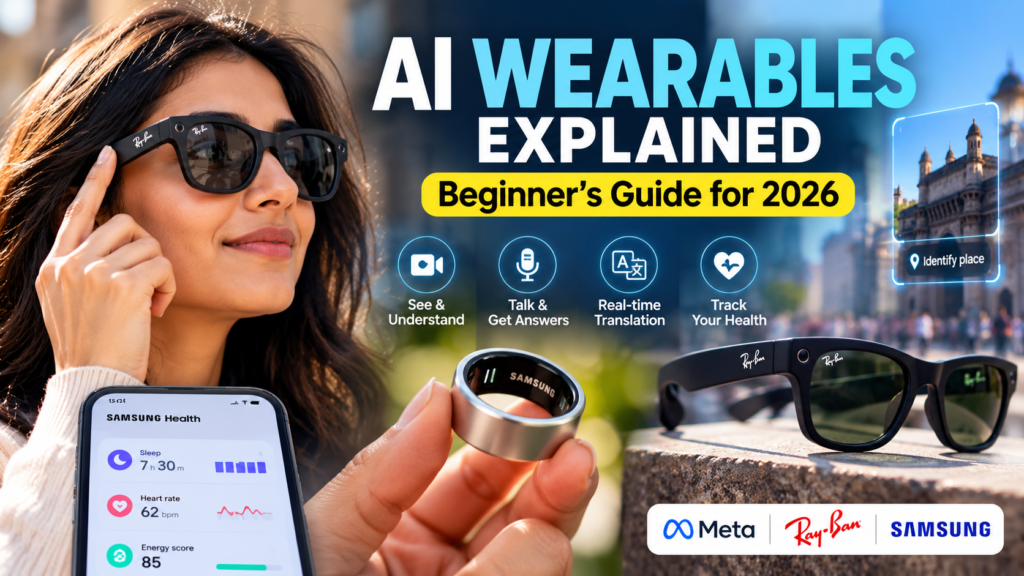
AI wearables are moving beyond simple step counters and notifications. In 2026, smart rings, watches, earbuds and AI glasses are increasingly combining sensors, software and AI to turn information from the device into more useful assistance. For beginners, the key point is that AI wearables are not one single product category: each form factor is designed for a different job.
What Are AI Wearables?
AI wearables are devices worn on the body that combine sensors, connectivity and AI-powered software to analyze information and provide insights or assistance. A smartwatch may use health and activity data to provide personalized insights, while AI glasses can use cameras, microphones and speakers to provide hands-free assistance.
The amount of AI built into a device varies. Some processing can happen on the wearable itself, while other features depend on a connected phone or cloud services.
How Do AI Wearables Work?
Most AI wearables follow a simple pipeline:
- Sensors collect information: depending on the device, this can include movement, heart rate, temperature, sound, images or other inputs.
- Software processes the information: algorithms and AI models identify patterns or respond to requests.
- The device or app presents an insight: you may see a health summary, hear an answer, receive a reminder or get hands-free assistance.
- Some features use a connected phone or cloud service: advanced AI features may require an internet connection, compatible phone or supported app.
Main Types of AI Wearables
1. Smartwatches and Fitness Bands
Smartwatches and fitness bands are useful when your priority is health, exercise, notifications and everyday convenience. AI can be used to interpret collected health and activity data, but the exact capabilities depend on the manufacturer and software.
2. Smart Rings
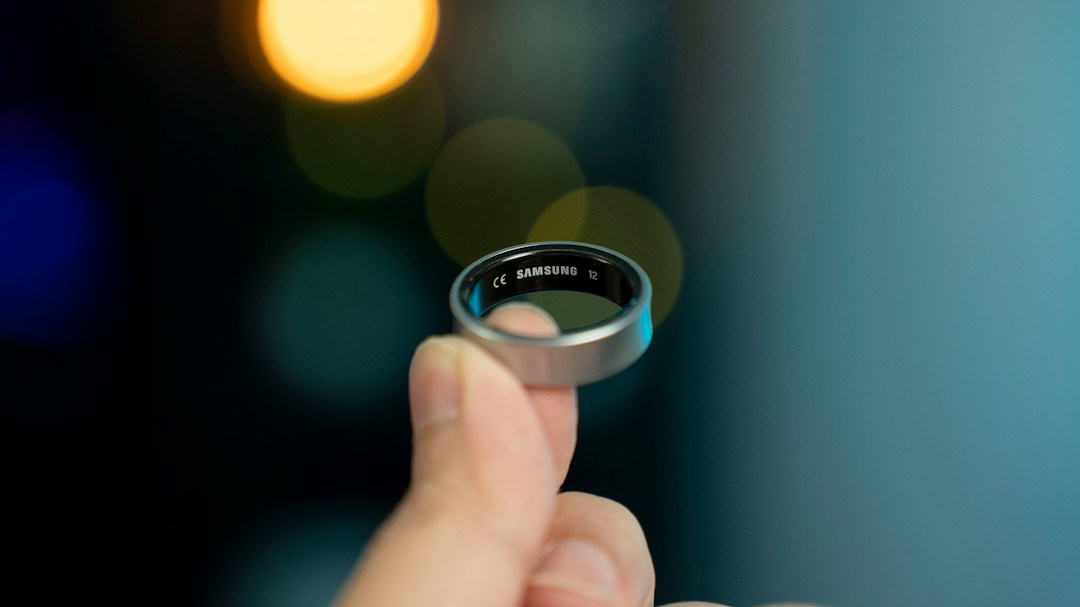
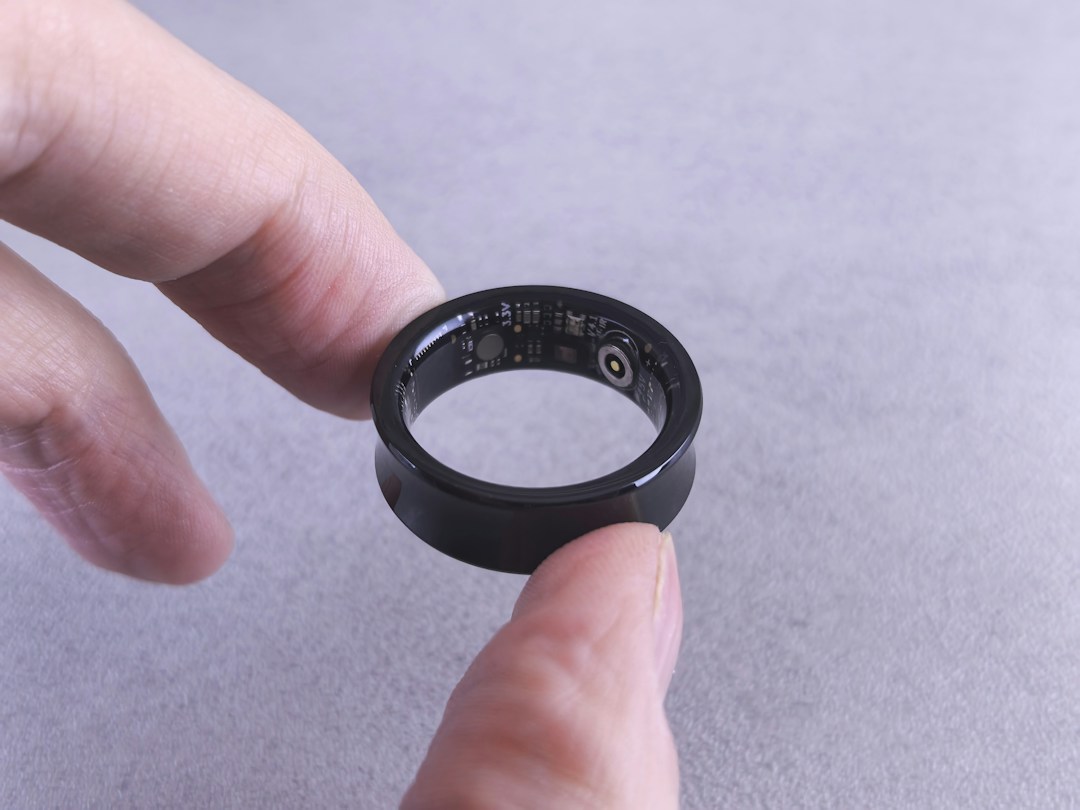
Smart rings focus on discreet health and wellness tracking. For example, Samsung says Galaxy Ring uses sensors to monitor health data and Galaxy AI to provide personalized health and sleep insights through Samsung Health. Samsung lists up to seven days of battery life, depending on usage and settings.
3. AI Glasses
AI glasses are one of the most visible developments in wearable AI. They can combine cameras, microphones, speakers and AI assistants to provide hands-free help. Meta’s 2026 updates include Ray-Ban Meta Gen 3, Ray-Ban Meta Audio and new AI features. Samsung’s 2026 intelligent eyewear similarly focuses on contextual AI, voice interaction and connection with a phone.
4. AI Earbuds and Hearing Devices
AI-enabled earbuds can combine audio processing, microphones and voice assistants. Depending on the product, features may include noise control, voice interaction, transcription or translation. Always check the exact model because AI capabilities vary significantly between earbuds.
5. AI Pins, Pendants and Voice Recorders
These devices are designed around voice capture, transcription, summaries and hands-free interaction. They can be useful for meetings and notes, but privacy, recording consent, battery life and subscription requirements should be checked before buying.
What Is Actually New About AI Wearables in 2026?
The biggest change is not simply that more devices have an AI label. Wearables are becoming more capable of acting as an interface between people and AI.
- AI glasses: Meta announced Ray-Ban Meta Gen 3 and Ray-Ban Meta Audio in 2026, while Samsung introduced intelligent eyewear designed around contextual mobile AI.
- Health wearables: smart rings and watches can turn collected health data into summaries and recommendations, depending on the product.
- Hands-free AI: cameras, microphones and speakers allow some devices to interact with AI without requiring a phone screen.
- Phone-assisted computing: some wearables distribute processing between the wearable and a connected smartphone rather than doing everything locally.
Real 2026 example: Meta says Ray-Ban Meta Gen 3 is available in India with up to nine hours of battery life, a 12 MP camera and 3K video recording. Samsung says its intelligent eyewear can use a connected Galaxy phone for split computing and support contextual experiences such as translation and navigation, with feature availability varying by market and device.
Key Benefits of AI Wearables
- Health awareness: understand trends in activity, sleep and other tracked metrics.
- Hands-free convenience: interact with information without constantly reaching for a phone.
- Personalized insights: some devices use collected data to generate recommendations or summaries.
- Productivity: selected devices can support reminders, voice notes, transcription or summaries.
- Accessibility: voice interaction, captions and translation can make technology easier to use.
How to Choose the Right AI Wearable
| Your main goal | Best starting category | What to check |
|---|---|---|
| Health and fitness | Smartwatch or fitness tracker | Sensors, health features, phone compatibility and subscription costs |
| Sleep and discreet tracking | Smart ring | Battery life, sizing, app quality and required subscription |
| Hands-free AI | AI glasses or earbuds | AI features, microphones, camera/privacy controls and connectivity |
| Meetings and notes | Voice recorder, pin or supported earbuds | Transcription quality, storage, privacy and recurring fees |
| General notifications | Smartwatch | iPhone/Android compatibility, battery and notification support |
Privacy and Security: What to Know
AI wearables can collect sensitive information, including health data, voice recordings, location information, images or other personal information. Before buying, check what the device collects, where information is processed, how long it is retained and which features require cloud services.
Camera-equipped wearables also affect the privacy of people around the wearer. Meta says its AI glasses use a visible capture LED to indicate when content is being captured. Local laws and consent requirements can also apply, especially when recording people or conversations.
Do AI Wearables Need Internet?
Not always. Basic tracking can often continue without an active internet connection, but advanced AI features may require a phone connection, network access or cloud processing. Samsung notes that some intelligent-eyewear experiences depend on a network connection, compatible Galaxy device or supported app.
Are AI Wearables Worth Buying in 2026?
They can be, if you have a specific use case. A smartwatch makes more sense for health and notifications, a smart ring can suit discreet tracking, and AI glasses can make sense if hands-free audio, cameras and AI assistance are useful to you.
Don’t buy an AI wearable simply because it has AI in the name. Check the features you will actually use, battery life, compatibility, privacy controls and the total cost of ownership.
Frequently Asked Questions
What is an AI wearable?
An AI wearable is a body-worn device that combines sensors and AI-powered software to analyze information or provide assistance.
Which AI wearable is best for beginners?
Start with the category that matches your main goal. A smartwatch is a practical general-purpose starting point, while a smart ring is better suited to discreet health tracking and AI glasses are better for hands-free interaction.
Are AI wearables safe for privacy?
Privacy depends on the device, software and settings. Review the manufacturer’s privacy policy and pay particular attention to camera, microphone, location and health-data controls.
Do AI wearables work without a phone?
Some functions can work independently, but many AI wearables rely on a companion phone or cloud service for advanced features. Check the exact product requirements before buying.
Final Thoughts
AI wearables are becoming more useful because AI is moving closer to the sensors and interfaces people already wear. The strongest products are not necessarily the ones with the most AI features; they are the ones that solve a real problem without adding too much friction.
For beginners, choose your main goal first, then compare supported AI features, battery life, compatibility, privacy controls and subscription costs.
For related reading, explore how on-device AI works on smartphones and our guide to choosing AI apps for Android and iPhone.
Sources and Further Reading
- Meta: Ray-Ban Meta Gen 3 and AI glasses updates in India
- Meta: Ray-Ban Meta Audio and 2026 AI glasses updates
- Samsung: Intelligent Eyewear and mobile AI
- Samsung India: Galaxy Ring and Galaxy AI health features
Explore more: Visit FutureGearAI for more AI, gadget and technology guides.