The Shift From Cloud Infrastructure to Local Hardware
Local hardware AI processing is changing how companies deliver artificial intelligence, from smartphones and PCs to telecom edge systems. At the same time, global data-centre spending projections point to major investment in centralized cloud facilities. The key question is where each AI task can run efficiently, securely and at a reasonable cost.
Perplexity CEO Aravind Srinivas has highlighted on-device processing as a major competitive pressure facing centralized infrastructure, warning that the rapid advancement of localized intelligence poses a direct challenge to traditional server farms. Similarly, Tyler Saltsman, CEO of EdgeRunner AI, described the current scale of data center compute as “overkill,” noting that running everyday workloads through giant mega-models is economically inefficient.
As mobile chip specialists like Qualcomm and Micron champion local execution on smartphones and personal computers, the fundamental architecture of how artificial intelligence delivers answers is undergoing a significant reassessment.
Understanding the Inference Bottleneck
To understand why local processing poses a challenge to infrastructure spending, one must look closely at inference—the operational phase where an AI model generates answers or executes tasks. While initial model training requires massive server clusters, inference represents the ongoing, recurring workload that scales with user adoption.
According to financial and market data, inference already accounts for roughly 40% of Nvidia’s data center revenue and is growing rapidly. Industry analysts expect inference to soon surpass training as the principal source of revenue for major chip suppliers. This transition creates intense competition over where these computational processes should occur.
Running inference in centralized data centers ensures maximum processing power but introduces heavy recurring costs, network latency, and continuous power demands. Conversely, shifting these tasks to user hardware eliminates per-token cloud charges and reduces reliance on constant internet connectivity.
Local Hardware AI Processing: Engineering Challenges
Moving complex workloads away from large server facilities and onto localized hardware introduces significant engineering obstacles. Mobile devices face strict thermal and battery limitations, meaning that continuous AI processing can quickly drain power.
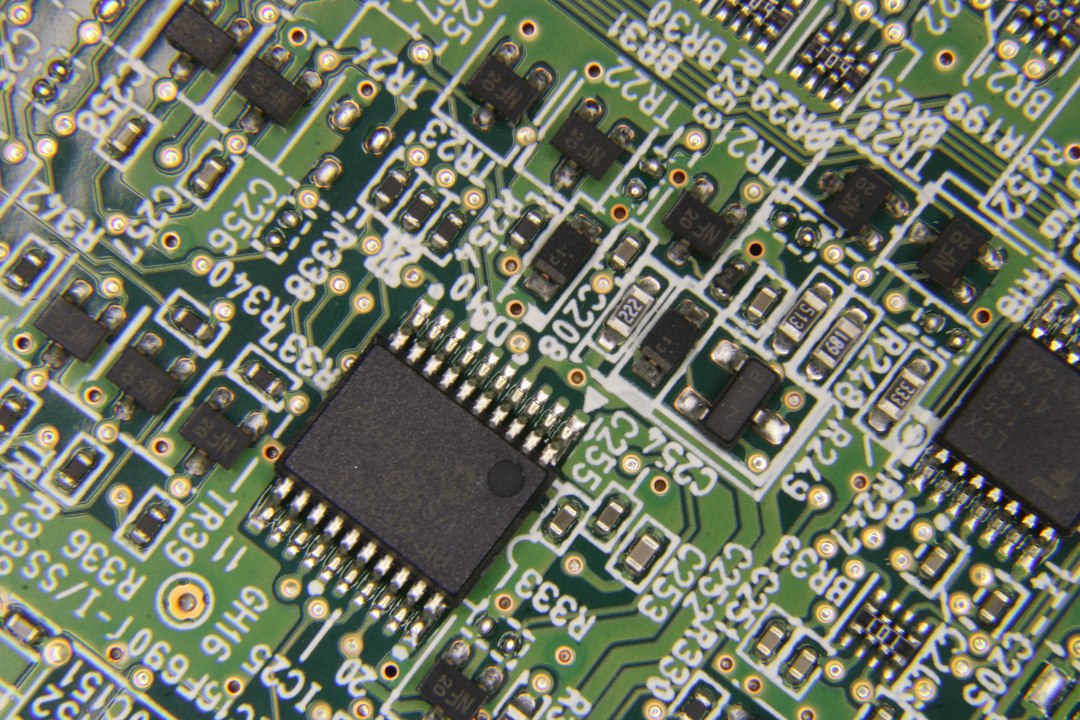
Furthermore, hardware architects must contend with the “memory wall”—a persistent hardware bottleneck where AI processors can analyze data faster than traditional memory systems can deliver it. Memory-chip manufacturer Micron Technology is attempting to address this by developing semiconductor architecture that performs specific operations directly inside memory chips, known as processing-in-memory. Meanwhile, Qualcomm designs tailored chipsets aiming to bring localized reasoning models to smartphones and personal computers while offering incremental power savings over previous generations.
For mobile users in regions where device-level capabilities heavily influence upgrade cycles, these architectural improvements dictate how efficiently phones can run localized features without crippling battery performance or causing excessive lag.
Alternative Architectures and Domain-Specific Models
Rather than relying on massive, general-purpose frontier models for every specialized query, some developers are shifting toward smaller, domain-specific architectures. Smaller models can be heavily compressed after initial cloud training, allowing them to execute directly on consumer or specialized hardware.
For instance, specialized military-grade or enterprise-focused models can operate locally using limited video memory on consumer-grade or edge-device hardware. By tailoring a model strictly to designated terminology, workflows, and protocols, developers can reduce error rates while avoiding the recurring costs of querying massive cloud infrastructure for routine tasks.
This modular approach aligns with broader market observations that the future of artificial intelligence may not rely on a single, monolithic system, but rather on a network of smaller, specialized models working in tandem.
Infrastructure Adaptations and Telecom Solutions
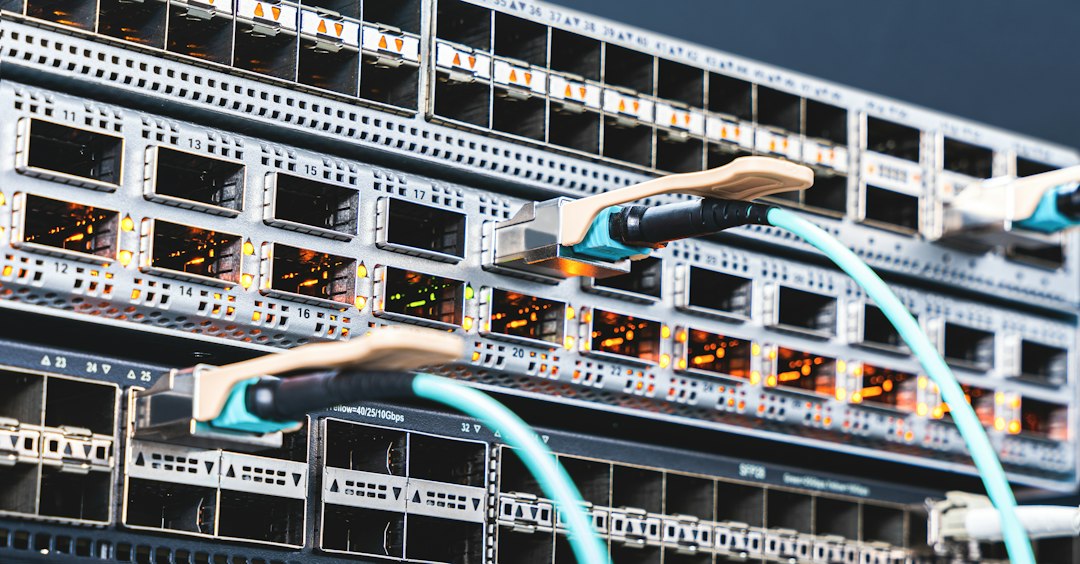
While mobile chipmakers push for processing on individual gadgets, other players are looking at middle-ground solutions. Nvidia, traditionally dominant in cloud and data center graphics processing units, is pitching ready-made solutions to telecommunications companies. By integrating hardware into local wireless infrastructure, telecom operators can act as decentralized micro-data centers.
This approach places compute resources closer to the end user to minimize lag while utilizing existing power grids. Companies like South Korea’s Samsung Electronics and SoftBank have explored or integrated similar wireless network configurations, estimating potential returns on infrastructure investments through specialized local inference services. However, telecom operators remain cautious about heavy capital expenditures following expensive rollouts of prior network generations.
Recent deployments such as Verizon Communications’ “AI Connect” suite of products for businesses illustrate how telecommunications firms are attempting to monetize local infrastructure through enterprise partnerships, leveraging local cell sites to bring computational power closer to the end user without forcing every task onto personal mobile hardware.
Local Hardware AI Processing vs Cloud AI: How to Decide
When evaluating whether workloads belong in centralized facilities or on localized hardware, organizations and developers weigh several core operational criteria:
- Latency Requirements: Applications requiring instantaneous response times without network dependency favor local execution.
- Cost Efficiency: Avoiding recurring cloud query fees makes local processing attractive for high-frequency, repetitive tasks.
- Data Privacy and Security: Sensitive information processed strictly on a local device reduces exposure risks associated with transmitting data to external servers.
- Computational Complexity: Deep, multi-step reasoning models that demand vast compute resources still require centralized cloud infrastructure.
- Hardware Constraints: Battery life, thermal dissipation, and available memory strictly limit the scale of models that can run locally.
Practical Uses of Local Hardware AI Processing
As enterprises evaluate the transition from pure cloud reliance to hybrid or edge-heavy deployments, several trade-offs emerge. Local hardware execution offers predictable operational costs and immunity to cloud provider pricing shifts, but it places the burden of hardware lifecycle management directly onto the enterprise or consumer. Upgrading device fleets every few years to support heavier model architectures represents a substantial capital expenditure that mirrors traditional IT infrastructure cycles.
On the other hand, maintaining a cloud-first infrastructure shifts maintenance burdens to hyperscale providers, granting instant access to cutting-edge accelerators without local hardware deprecation risks. However, organizations handling highly regulated financial or healthcare data often find that the legal and compliance hurdles of transmitting sensitive information to external cloud endpoints outweigh the convenience of centralized processing. Consequently, many large organizations are adopting a tiered architecture: routine, low-latency classification tasks run on local edge devices, while heavy reasoning and multi-document synthesis are routed securely to private or public cloud environments.
Furthermore, McKinsey findings indicate that executing the exact same task can cost up to 30 times more depending on the specific AI agent deployed, underscoring why enterprise architects are actively scrutinizing efficiency before committing to sweeping cloud deployments.
For example, local hardware AI processing can handle offline transcription, basic document classification or private on-device summaries. Tasks involving large datasets or complex multi-step reasoning may still need cloud resources. A hybrid setup routes each request according to its privacy needs, response time and compute requirements.
Frequently Asked Questions
- What is the main advantage of local AI processing over cloud computing? Local AI processing eliminates per-token query fees, reduces network latency, and ensures data remains on the device, significantly enhancing privacy.
- Why can’t all AI models run on local smartphones and computers? The “memory wall” and strict thermal/battery constraints limit the physical size and computational complexity of models that can run efficiently on consumer hardware.
- Will local hardware completely replace data centers? Unlikely. While local hardware handles routine inference efficiently, massive frontier models requiring intense compute capacity will continue to rely on centralized cloud facilities.
- What is processing-in-memory? Processing-in-memory is an architectural approach where specific computational operations are performed directly inside the memory chip, helping to bypass traditional memory bandwidth bottlenecks.
For a practical next step, compare this approach with our guide to AI tools for small businesses, which explores where AI can save time in everyday workflows.
What to Watch Next
The debate over whether on-device processing will curb the data center boom hinges on the pace of semiconductor innovation and shifting enterprise spending patterns. While chipmakers and mobile manufacturers race to place powerful inference capabilities directly into consumer hardware, the sheer scale of investment in cloud infrastructure continues at a historic pace. Whether localized execution successfully undercuts cloud demand or merely complements it will depend on how effectively hardware developers solve memory bandwidth and power efficiency hurdles in the coming years.
Sources & further reading
- AI quote of the day: ‘Biggest threat to a data center is on-device AI’, says Perplexity CEO Aravind Srinivas — The Financial Express
- Data center spending to reach $31.6 trillion by 2050 on AI boom — moneycontrol.com
- Will On-Device AI Slow The Data Center Boom? — Forbes
- EXCLUSIVE: AI Data Center Boom Is ‘Overkill,’ Defense AI CEO Warns Compute Demand Will Drop — Yahoo Finance