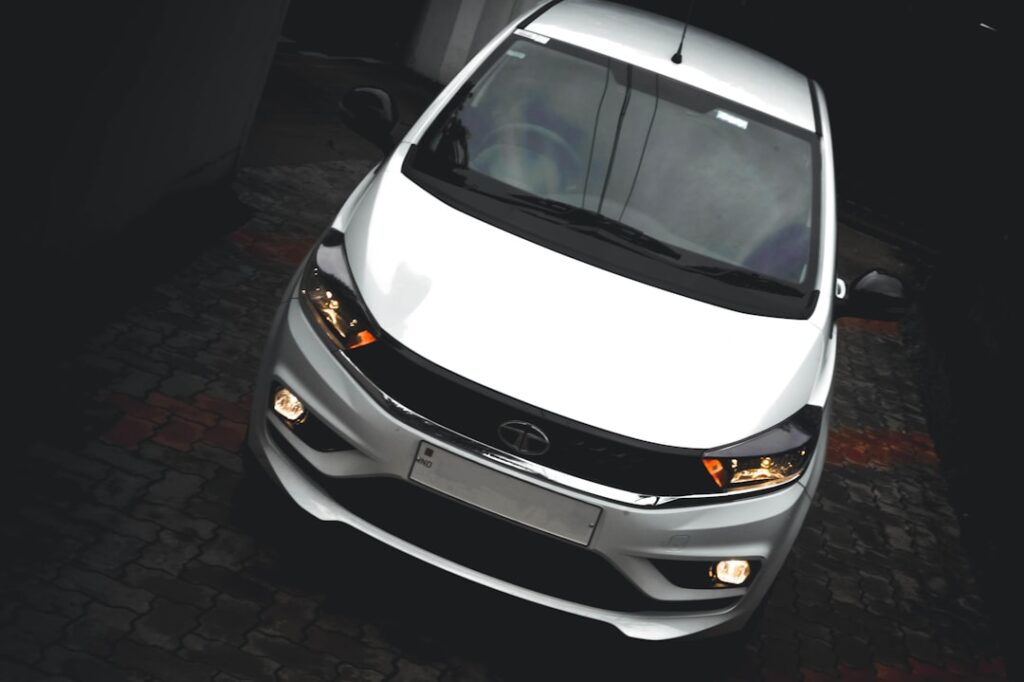
India’s passenger electric vehicle landscape underwent a decisive transformation in 2025. While earlier years were characterized by tentative exploratory buying and restricted model catalogues, the market recorded a major expansion as passenger EV retail volumes surged 77.04% year-on-year to 176,817 units, according to retail registration data compiled by the Federation of Automobile Dealers Associations (FADA). Passenger EV market penetration climbed to 4.0%, up from 2.4% in 2024.
At the top of the leaderboard, Tata Passenger Electric Mobility (TPEM) retained its crown, retailing 70,004 units. However, the dynamics beneath that headline figure have shifted sharply. Tata’s moderate volume expansion of 13.28% unfolded against explosive gains from JSW MG Motor India—which took second place with over 51,000 units—and Mahindra & Mahindra, which surged nearly five-fold into third position. For Indian car buyers evaluating an electric vehicle, the market has transitioned from a near-monopoly to a fiercely contested battlefield across diverse price brackets.
The 2025 EV Retail Scorecard: Volume and Market Shifts
Official dealer registration numbers collated by FADA across 1,401 of the country’s 1,459 Regional Transport Offices (excluding Telangana) outline how market share redistributed in 2025:
| Manufacturer (OEM) | CY 2025 Sales (Units) | CY 2024 Sales (Units) | YoY Growth (%) |
|---|---|---|---|
| Tata Motors Passenger Vehicles Ltd | 70,004 | 61,799 | +13.28% |
| JSW MG Motor India Pvt Ltd | 51,387 | 21,814 | +135.57% |
| Mahindra & Mahindra Limited | 33,513 | 7,139 | +369.44% |
| Hyundai Motor India Ltd | 6,726 | 914 | +635.89% |
| BYD India Private Limited | 5,402 | 2,869 | +88.29% |
| BMW India Pvt Ltd | 3,195 | 1,227 | +160.39% |
| Kia India Private Limited | 2,730 | 415 | +557.83% |
| Mercedes-Benz AG | 1,168 | 954 | +22.43% |
| Stellantis Automobiles India | 871 | 1,925 | -54.75% |
| VinFast Auto India Pvt Ltd | 826 | 0 | N/A |
| Volvo Auto India Pvt Ltd | 389 | 450 | -13.56% |
| Tesla India Motors and Energy | 225 | 0 | N/A |
| Others | 381 | 369 | +3.25% |
| Total Industry Retail | 176,817 | 99,875 | +77.04% |
(Note: Interim Vahan tallies reported in late December 2025 by outlets like Hindustan Times estimated Tata at 65,264 and MG at 50,356 units; final consolidated FADA calendar-year data finalized on January 3, 2026, confirmed the higher totals reflected above.)
Tata Motors: Volume Fortress Facing Slower Relative Momentum
Tata Motors maintained its supremacy by leveraging the broadest electric portfolio in the Indian market. Sustained buyer demand for the Nexon EV, Punch EV, and Tiago EV anchored its mass-market delivery machine. At the upper end of its line, the Harrier EV enjoyed an energetic launch that extended Tata’s coverage beyond compact crossovers into larger, premium territory.
However, an annual retail growth rate of 13.28% represents a dramatic slowdown compared to the broader passenger EV market’s 77.04% surge. Having captured the early-adopter market in previous years, Tata faced two structural realities in 2025: a high baseline volume that makes rapid percentage scaling difficult, and direct product cross-shopping from aggressive competitors targeting its core price segments.
JSW MG Motor India: Consolidating the Second Spot
JSW MG Motor India emerged as the unambiguous runner-up, registering 51,387 units—a leap of 135.57% over its 2024 mark of 21,814 vehicles. The primary catalyst was the MG Windsor EV, which alone crossed the 50,000-unit sales milestone during the year, effectively challenging the Nexon EV’s dominance by providing spacious packaging and alternative ownership models. Readers curious about how battery rental mechanisms affect upfront pricing can explore our analysis of Battery-as-a-Service economics in India.
Alongside the Windsor EV, the compact Comet EV retained steady urban interest for city commuting, while the ZS EV defended MG’s footprint in both the private retail and commercial fleet sectors.
Mahindra’s Electric Rebound: The Born-Electric Platform Delivery
Mahindra & Mahindra demonstrated the highest volume acceleration among major domestic carmakers. Retail registrations reached 33,513 units in 2025—nearly a five-fold increase (+369.44%) from 7,139 units in 2024.
This performance was driven almost entirely by its dedicated electric architecture vehicles, the Mahindra XEV 9e and BE6. Following their commercial launch in March 2025, the two models collectively surpassed 30,000 sales in just seven months. Mahindra closed out the year by introducing the three-row, seven-seater XEV 9S, with retail deliveries slated to commence in late January 2026. This aggressive, purpose-built vehicle cadence has positioned Mahindra as the fastest-growing volume EV manufacturer in the country. To see how these newer architectures match up against established nameplates, read our breakdown of the Tata Curvv EV versus Mahindra BE 6e.
Mid-Tier and Luxury Dynamics: Creta EV, BYD, and Luxury Surges
Beyond the domestic top three, established global OEMs recorded substantial strategic movement:
- Hyundai Motor India: Jumped 635.89% to 6,726 units, unlocked largely by the market introduction of the Hyundai Creta electric.
- BYD India: Maintained fifth place with 5,402 units (+88.29%), led by the Atto 3, the eMax 7 MPV, and performance-oriented nameplates including the Seal and Sealion.
- Kia India: Reached 2,730 units (+557.83%), boosted by the Carens Clavis EV rollout.
- Luxury Segment: BMW India led luxury battery-electric registrations with 3,195 deliveries (+160.39%), supported by entry models like the iX1 Long Wheelbase and the flagship i7. Mercedes-Benz grew 22.43% to 1,168 units across its EQ portfolio (EQB, EQE, EQS), while Volvo declined 13.56% to 389 units despite the arrival of the EX30. New international entrants VinFast (826 units) and Tesla (225 units) made their initial appearances on national dealer registration records.
Key Buyer Considerations in 2026
With EV retail volume expanding and choices diversifying, consumer purchase criteria in India have evolved beyond simple range anxiety:
- Platform Architecture vs. Retrofit: Buyers now choose between vehicles adapted from internal-combustion platforms (such as the Nexon EV and Creta EV) and purpose-built native EV skateboards (such as Mahindra’s XEV/BE series and the MG Windsor). Native architectures often provide superior cabin packaging, flat floorboards, and optimized battery integration.
- Financing and Battery Ownership Models: MG’s aggressive push with innovative acquisition models showed that total cost of ownership (TCO) and flexible initial down payments play a decisive role in urban purchasing decisions.
- Infrastructure Dependencies: As noted by FADA leadership, wider adoption hinges on sustained retail financing flexibility and charging station density outside tier-1 metros. Prospective buyers must evaluate whether their primary use case allows regular home charging. For broader market insights, examine what is driving India’s broader electric transition.
Verdict: An Authentic Multi-Horse Race Has Begun
Tata Motors closed 2025 with its market crown intact, proving that its extensive portfolio breadth and early head start continue to command volume. However, the era of uncontested dominance is finished. With JSW MG establishing high-volume momentum through the Windsor EV and Mahindra scaling born-electric SUV production at a breakneck pace, the Indian electric vehicle segment in 2026 is officially a multi-player race where product architecture, pricing strategy, and software reliability will decide the next champion.
Sources & further reading
- Tata Motors, JSW MG, M&M drive EV retails to 77% growth in 2025: FADA — ET Auto
- Tata Motors to lead India’s EV sales in 2025; MG close behind, Mahindra third — Hindustan Times