The Problem with Modern Workplace Note-Taking
Professionals and knowledge workers constantly juggle meetings, impromptu discussions, and multi-tasking environments where valuable information slips through the cracks. Traditional note-taking often distracts from active participation, while relying on memory leads to incomplete follow-ups. Startups have attempted to solve this friction through dedicated recording hardware, but they typically require a tethered smartphone or local Wi-Fi connection to process information. The unveiling of the Plaud One marks a distinct shift in how hardware manufacturers approach portable productivity, introducing standalone connectivity directly to the ecosystem.
What is the Plaud One?
Developed by note-taking device startup Plaud Inc., the Plaud One represents a deliberate expansion into the competitive AI wearable race. Unlike standard wireless earphones engineered purely for music consumption or casual calls, these are AI-first earbuds built from the ground up to capture verbal communication. According to reports from Forbes and TechRepublic, the hardware is designed not just to listen, but to actively summarize and execute workplace tasks derived from spoken interactions.
The Role of 4G Connectivity in the Charging Case
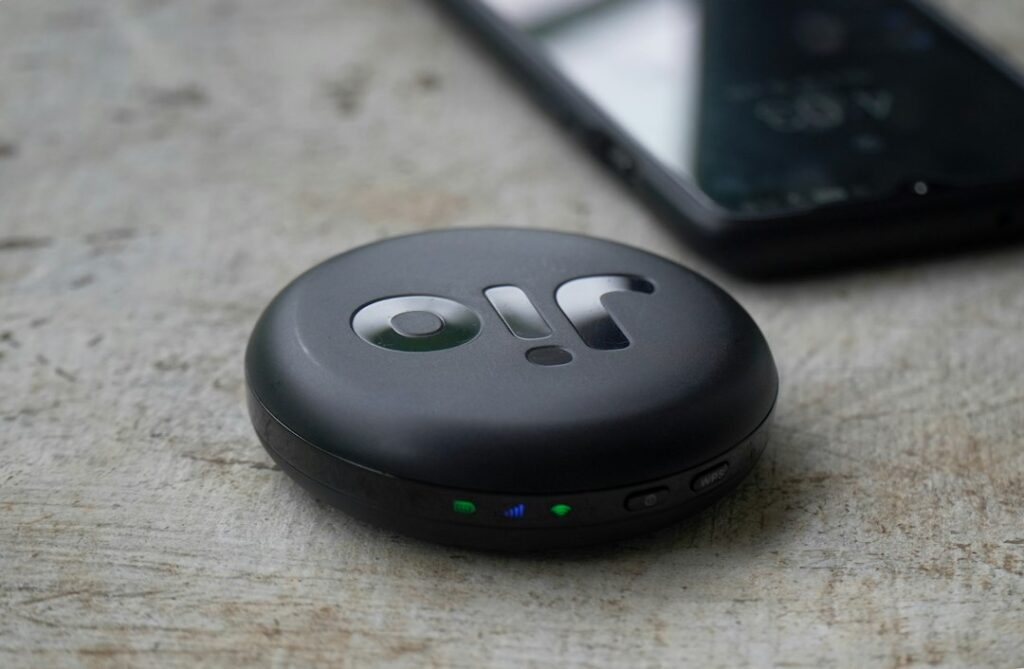
The defining hardware choice of the Plaud One ecosystem is the inclusion of 4G connectivity housed directly within its charging case. Standard smart audio gear relies completely on a Bluetooth connection routed through a host smartphone to push data to the cloud. By equipping the charging case with cellular capabilities, Plaud enables the device to handle data transmission independently. This architecture hints at a future where users can leave their smartphones behind or operate untethered while ensuring that dialogue capture and AI assistant interactions remain uninterrupted by local network boundaries.
Core Capabilities: Capturing, Summarizing, and Acting
The primary value proposition of the Plaud One centers on a three-tier workflow:
- Capture: Seamlessly recording workplace conversations directly via the wearable earbuds and case infrastructure.
- Summarize: Utilizing integrated artificial intelligence to distill lengthy verbal exchanges into concise, actionable text notes.
- Act: Interacting with AI assistants to execute tasks and follow-ups derived from the transcribed context.
This positions the product as an active workflow agent rather than a passive storage drive for audio files.
Evaluating the Trade-Offs and Limitations
While the prospect of an autonomous, cellular-enabled AI earbud sounds compelling, prospective buyers must weigh several inherent trade-offs. Standalone 4G connectivity introduces considerations regarding cellular subscription costs, battery drain on the charging case, and data privacy. Constantly recording and transmitting workplace conversations via cloud-based artificial intelligence raises significant security concerns for corporate environments dealing with proprietary or sensitive information. Furthermore, relying on an automated agent to interpret nuances, action items, and context leaves room for misinterpretation that requires manual oversight.
Analyzing the AI Hardware Landscape Shift
The introduction of the Plaud One highlights a broader industry trend where hardware startups are moving away from traditional form factors like smartphones and smartwatches to deliver specialized, single-purpose AI interactions. By integrating recording hardware natively with 4G technology, Plaud aims to eliminate the friction points of device pairing and Bluetooth range limitations. However, as these AI agents take on heavier computational and communication loads, managing thermal performance, audio clarity in loud environments, and seamless cloud handoffs remains a critical engineering hurdle that manufacturers must clear to achieve mass-market adoption.
Decision Criteria for Tech Buyers
Before investing in emerging AI-first hardware categories like the Plaud One, consumers and professionals should evaluate their specific daily bottlenecks:
- Do you frequently participate in verbal brainstorming sessions or meetings where manual note-taking hinders your engagement?
- Does your daily routine benefit from untethered cellular connectivity, or are you usually within arm’s reach of a smartphone and reliable Wi-Fi?
- How does your organization handle data privacy policies regarding third-party cloud transcription and AI processing tools?
For more insights on emerging hardware categories making waves this year, explore our curated roundup of Next-Gen Tech: 9 Game-Changing Gadgets Arriving in 2026.
The Verdict on Plaud’s AI Gadgets Push
The Plaud One illustrates a logical evolution for a company rooted in dedicated note-taking hardware. By integrating wireless earbuds with a 4G-connected case and advanced artificial intelligence, Plaud aims to streamline the tedious transition from spoken word to completed task. However, the success of this device will ultimately depend on real-world execution, battery endurance, and how effectively it navigates the strict data privacy requirements of modern workplaces. It is an ambitious entry into the wearable AI space that shifts the focus from entertainment to functional productivity.
Sources & further reading
- Plaud One Wearable AI Earbuds Can Capture Conversations And Act On Them — Forbes
- Plaud One: AI Earbuds That Listen, Summarize, and Take Action — TechRepublic
- Plaud Unveils Earbuds With 4G Connectivity in AI Gadgets Push — Bloomberg